
Tendinitis Relief & Treatment
Care for painful, swollen tendons in the foot and ankle, from rest and bracing to a structured return to the activities you enjoy.
Tendinitis is a tendon telling you it has been asked to do too much.

Inflammation or irritation of a tendon is referred to as tendinitis. Tendons, which are found in many different areas of the body, are thick, fibrous tissues that link muscles to bones. If tendons in your feet or ankles are affected, you’ll benefit from a visit to Tievsky Podiatry.
What Causes Tendinitis in the Foot Area?
Tendinitis tends to develop when a muscle within the foot area is stretched beyond its normal range of motion. As a result of this stretching, a tendon becomes inflamed, or swollen. When this happens, it can be difficult to walk, run, or do any other movements involving your feet or ankles. While anyone can be affected tendinitis, it tends to be more common in athletes or anyone who regularly runs or jogs. Tendonitis affecting feet and/or ankles may also be related to:
- Overuse of muscles within the foot/ankle area
- Jumping into a new exercise routine too quickly
- Anatomical alignment issues that don’t allow a tendon to move smoothly
Achilles Tendinitis
This is the most common type of foot-related tendinitis. It affects the large tendon located in the back part of the ankle. It’s a condition seen more common in middle-aged athletes who participate in sports on a recreational basis. In addition to pain and swelling in the affected area, Achilles tendinitis may produce symptoms that include:
- Pain felt along the back of the tendon that gets worse with movement or activity
- Severe discomfort that’s still felt a day or so after exercising
- Tight calf muscles
- Thickening of the affected tendon
- Reduced range of motion within the affected area
- Pain related to the formation of bone over-growths called bone spurs
Other Forms of Tendonitis We Treat at Tievsky Podiatry
Tendonitis can affect several parts of the feet and nearby structures in many ways. For this reason, we treat multiple forms of tendonitis at Tievsky Podiatry. These include:
- Extensor tendonitis: This type of tendonitis affects foot tendons that attach to muscles in the front of legs and top of the feet.
- Flexor tendonitis: This type of tendonitis affects foot tendons that attach to muscles in the back of legs and bottom of the feet.
- Peroneal tendonitis: This type of tendonitis affects the outer part of the ankle and foot.
- Posterior Tibial Tendonitis: This type of tendonitis affects the inner side of the ankle and foot.
How We Diagnose and Treat Tendonitis
Diagnosis of tendon-related pain in the foot/ankle area typically starts with a physical examination of the affected area. A gait evaluation may also be done to see how your discomfort is affecting your mobility. Treatment will depend on the severity of the symptoms. However, many patients respond well to a combination of medication and therapeutic exercises. Bracing may be recommended as well. If there is a tendon tear suspected and MRI will likely be ordered. Sometimes surgery may become an option if the tear is severe.
If you believe your feet and/or ankles may be affected by tendinitis, visit Dr. Tievsky at Tievsky Podiatry for an evaluation. Should you have foot-related issues due to inflamed tendons, appropriate treatment and pain management recommendations can be made.
Contact our office today to schedule an appointment for an initial foot examination.
Our approach
How we evaluate and treat tendinitis.
Most tendon pain settles with conservative care when it is treated early. Our plan depends on which tendon is involved, how long it has hurt and what you want to get back to.
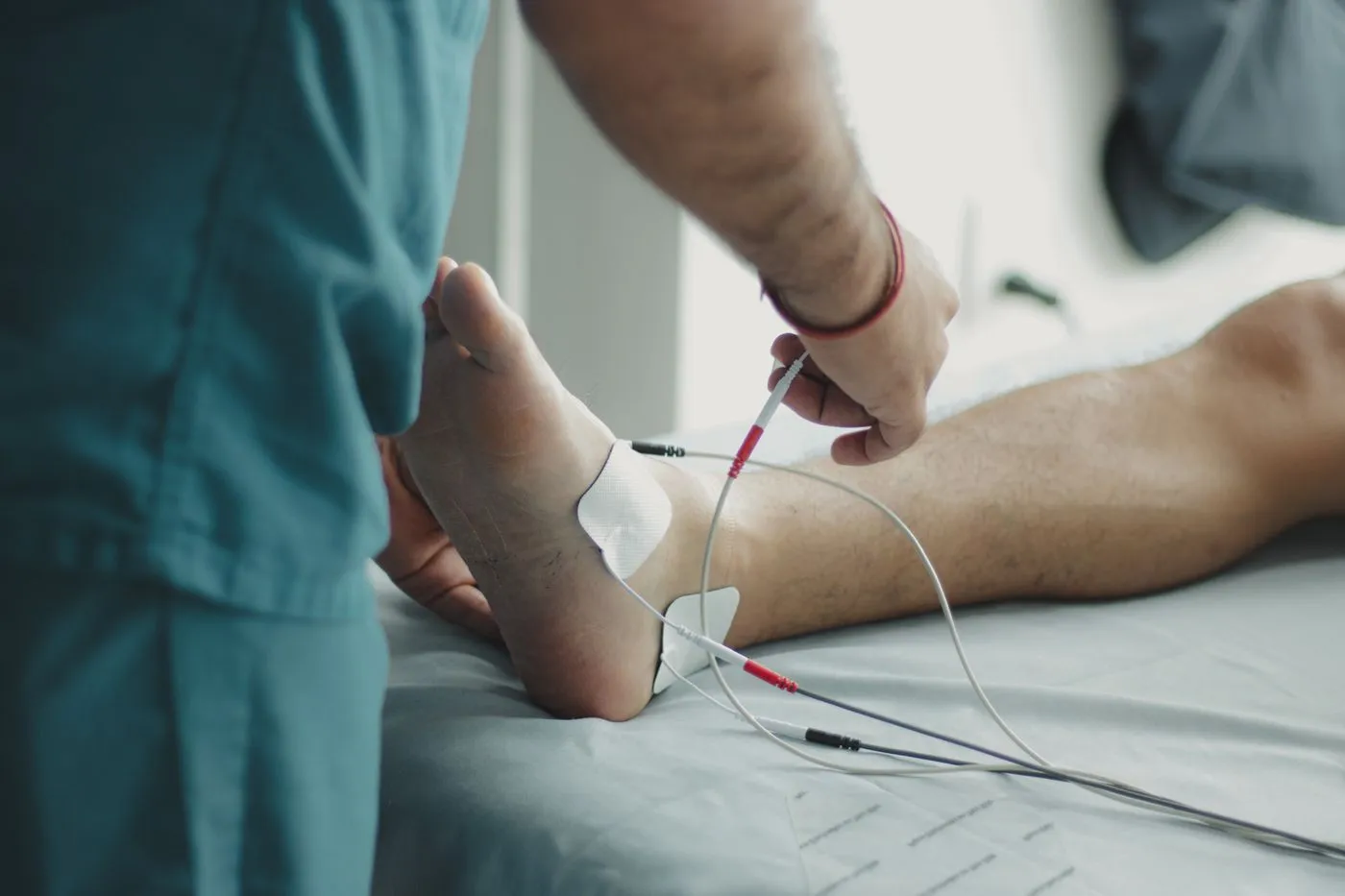
Finding the Tendon
Dr. Tievsky examines the foot and ankle, presses along each tendon and watches how you walk. Where the pain sits, whether at the back of the heel, the inner or outer ankle, or the top of the foot, points to the tendon involved.
Calming the Inflammation
Relative rest, ice and anti-inflammatory medication can ease the swelling. A brace, walking boot or heel lift may be used for a time to take strain off the tendon while it settles.
Strength and Support
Stretching and strengthening exercises help the tendon tolerate load again. When foot alignment adds to the strain, custom orthotics or a change of shoes can help keep the problem from coming back.
Imaging and Surgery
If a tear is suspected or the pain does not improve, an MRI shows the condition of the tendon. Surgery is considered only for significant tears or cases that do not respond to conservative care.
