High Arches Care & Support
Care for high-arched feet that ache or roll, starting with a careful diagnosis and support that spreads the load across the foot.
A high arch puts extra load on the heel and the ball of the foot.

What are high arches?
Also known as cavus foot, a high-arched foot is a condition where the arch of the foot is abnormally high. As a result of the high arch, a lot of weight is exerted on the heel and ball of the foot when a person is standing or walking.
There are several signs and symptoms associated with a cavus foot. Some of them include a lack of stability and pain. The condition can be experienced at any age and may affect both feet or just one.
Causes of high arches
High arches are sometimes brought about by a neurological disorder such as Charcot-Marie-Tooth disease, cerebral palsy, stroke, spina bifida, or muscular dystrophy. Other high arch conditions manifest as an inherited structural abnormality.
It is important to conduct an accurate diagnosis since the underlying cause of the condition plays a big role in determining the direction the disease will take in the future.
If for example, cavus foot is caused by a neurological disorder, then the chances of it worsening are high. But if a neurological disorder is not the cause, then the appearance won’t likely change.
What are the symptoms?
In most cases, the arch or the cavus foot is visibly high when one is standing. Besides, there are a few other symptoms that can identify the condition:
- Presence of celluses on the ball or heel of the foot
- Hammertoes or claw toes
- Instability of the ankle
- Pain when walking or standing
- Loud stomping when bare foot
Diagnosis
The diagnosis of high arches involves a review of the person’s family history. The surgeon who specializes in foot and ankle starts by examining the foot searching for the high arch. He or she will also try to check if the patient has claw toes or calluses or hammertoes.
The doctor will also test for muscle strength and observe the walking pattern of the patient. In case the doctor finds out the high arch is as a result of a neurological condition, he or she may decide to examine the whole limb. To be more accurate, the surgeon may also study the shoes of the patient and how they wear them.
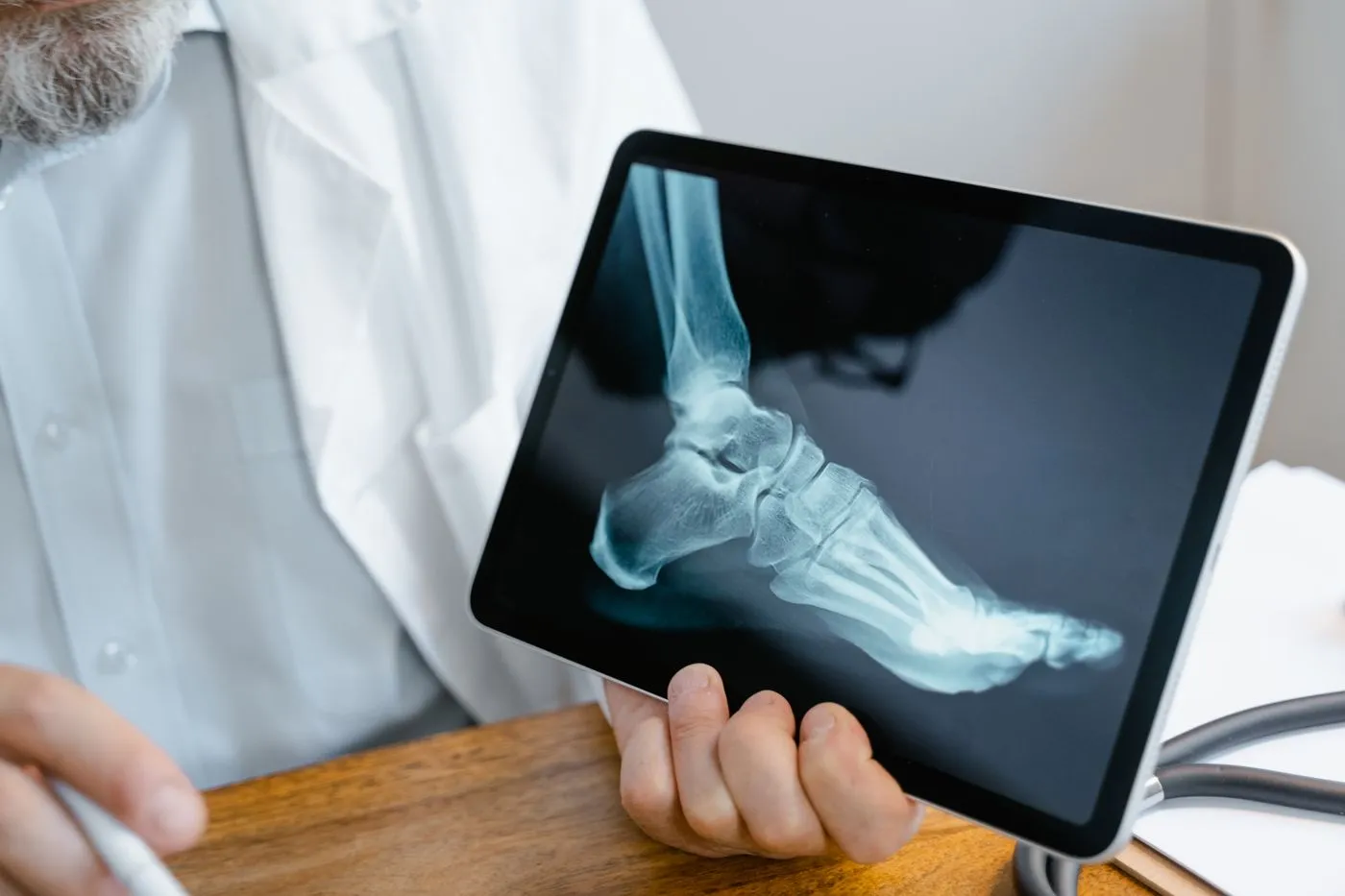
An X-ray may also be ordered to assess the condition further. In some cases, the surgeon can opt to refer the patient for a comprehensive neurological evaluation by a neurologist.
Non-surgical treatment
There are a few non-surgical options for high arches. They include the following:
1. Bracing: A surgeon can recommend braces to assist keep the foot and ankle in a stable position.
2. Orthotic device: A customized orthotic device can also be used to offer stability and protect the foot from biomechanical forces
3. Shoe modification: A patient with high arches can also use high-topped shoes to provide support to the ankle
Located in Bergen County NJ (Paramus, Fair Lawn, Ridgewood….) contact Dr. Alex Tievsky today for help in determining what the best course of treatment is to get you started on the process of freeing yourself from foot pain.
Our approach
How we evaluate and treat high arches.
Because the cause shapes how a high arch behaves over time, treatment starts with finding out why the arch is high.
History and Examination
Dr. Tievsky asks about family history, examines the arch, toes and calluses, tests muscle strength and watches how you walk. He also looks at the wear pattern on your shoes.
X-rays and Further Tests
X-rays show the shape of the arch and the position of the bones. If a nerve or muscle condition may be involved, you may be referred to a neurologist for a full evaluation.
Orthotics, Bracing and Shoes
Custom orthotics, casted after an evaluation by Dr. Tievsky, cushion the foot and spread pressure away from the heel and ball. Braces and high-topped or well-cushioned shoes can steady an unstable ankle.
Surgical Options
When pain or instability continues despite these measures, or the deformity is getting worse, surgery to rebalance the foot may be considered. Dr. Tievsky trained in reconstructive foot and ankle surgery and will discuss whether it suits your foot.
